Pick a Place You Want To Spend the Next Three Years

Above all else, a degree course will teach you how to think. Whatever degree course you take, it will teach you how to compare options and make the best possible choice.

If all Australian degrees are created equal, how can you choose where to go to get a degree?
This is the very real question facing many Australian students. The answer is not easy. Because all Australian degrees are, by and large, created equal. The government requires all tertiary institutions to teach to a set level. A high level, when compared to the rest of the world.

A degree is a big commitment. Six semesters, over two to three years at least.

Perhaps the question should be, “Where do you want to spend that time?”

Some students love big crowds, being part of the hustle and bustle of a large campus, happy to go it alone in a sea of competition.

For a number of students, large institutions do not work. So there is an option.

Smaller, private institutions, like the Melbourne Institute of Technology, provide a real alternative for students who fear they may struggle to live up to their own expectations at a larger campus where they can often feel isolated.

Smaller institutions provide a number of very real benefits for these students. More attention from staff can provide a big confidence boost for less confident students. Read More

Create the Future of Australian and Global Technology with an MIT Education

MIT is registered by the Tertiary Education Quality and Standards Agency (TEQSA) as a higher education provider and our courses are accredited by TEQSA. MIT is also registered on the Commonwealth Register of Institutions and Courses for Overseas Students to provide courses for overseas students.

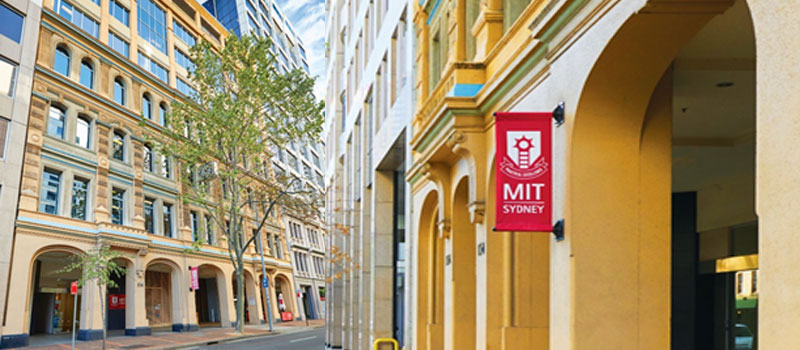
MIT has two campuses, located in the heart of two of the most liveable cities of the world, Melbourne and Sydney. Aptly located in the heart of the CBDs, both the campuses are easily accessible by public transport and offer a diverse and vibrant experience to the students.

MIT provides a suite of undergraduate and postgraduate coursework programs to domestic and international students in Business, Accounting, Information Technology, Computer Networking and Engineering (Telecommunications). These programs include Bachelor of Computer Hardware and Networking, Degrees in Cybersecurity, Graduate certificate in IT, Master in Data Science, Free Online Short Courses, Free Cybersecurity Courses, Master of Accounting, and Bachelor in Software Engineering. In addition, the institute also offers NEAS-endorsed English language programs through its English Language Centre.

Graduating job-ready with skills and knowledge you can apply immediately in the workforce is definitely a given with MIT because all degrees at MIT come with a work integrated learning (WIL) component to give you industry experience before you venture out into the real world on your own! Undertake an industry-based project or internship which could lead to work opportunities as many of our students have experienced.

Take advantage of our institution’s relationship with industries of all sizes and types, profit, and not-for-profit. We offer career support both during your studies and after you graduate.

If you are thinking about quality education and personalised learning experience, MIT looks forward to meeting with you.

Melbourne Institute of Technology: Building and Protecting Australia’s Future

MIT encourages bold, independent thinking and offers the highest quality academic experience. Students thrive on plenty of autonomy to map their own learning, with our tutors on hand to challenge their ideas. The small class sizes allow students to enjoy more contact time with our tutors and support whenever they need it to get the best out of their studies.

MIT programs include a wealth of industry connectivity which gives students valuable opportunities including access to career prospects. Whether a student graduates as a Master in Cyber Security or Bachelor of Marketing or Master of Professional Accounting or Bachelor of Accounting or Bachelor of Business Degree, he or she is guaranteed a bright professional future armed with an MIT education and the Australian academe’s values. Demonstrating MIT’s quality education is that graduates are currently working in world-known companies and starting successful companies themselves.

MIT has two campuses, located in the heart of two of the most liveable cities of the world, Melbourne and Sydney. Perfectly located in the heart of the two CBDs, both campuses are easily accessible by public transport. Students are surrounded by cafes, restaurants, shops, and other vibrant and exciting venues. Being in the city provides students with a diverse and exciting experience. It also provides them with a range of part-time job opportunities and internship placements.

If you are looking for the place to prepare yourself for the world you dream of, join MIT. Work on real-world projects in the business, IT and engineering industries. Our industry projects give you the opportunity to work with major industry partners, solve real world challenges, and mark your value in the workforce. Read More

Abhishek NEGI – Master of Professional Accounting

Despite not being from an accounting background, I’ve managed to excel in my course due to the support I’ve received from my professors early on in my degree in the Master of Professional Accounting. The majority of the teaching staff at MIT have a PhD which means students get specialist knowledge. Moreover, the course is carefully designed with a range of assessment tools that ensure students have an in-depth understanding of the concepts and are able to apply the theoretical knowledge properly to real life situations.

My goal is to become a management accountant. Through the in-depth knowledge I’ve gained from this degree, I’m more confident than ever to pursue this path that combines my management experience with my newly polished skills learnt at MIT.

Click here for more student stories.

Shamika Wijesinghalage – Master of Engineering (Telecommunications)

Choosing MIT has been the best decision I’ve made for my further studies in the telecommunication field. I originally chose MIT because the engineering degree is accredited by Engineers Australia and because of MIT’s great location in the heart of the city. After studying here, I’ve found that MIT also takes a holistic approach to education and provides the utmost care and assistance to students.

I’ve received one-on-one help when I’ve struggled with assignments and lab work, and lecturers have also stayed back after class to help me figure out any concepts I had trouble with. The degree is very practical – I’ve been involved in project work that requires us to find engineering solutions in existing systems, and solve real-time problems – all skills that will be useful on the job. Studying Master of Engineering at MIT has definitely increased my confidence to pursue my passion in the telecommunication industry. Read More

MIT’s response to COVID–19

As the corona virus (COVID-19) situation has continued to evolve around the world, MIT has been actively assessing the risk and impact on a daily basis and monitoring guidance from public health and regulatory authorities. Our primary concerns are the health and safety of our students and staff.

Returned travellers

On 15 March 2020, the Australian Government announced:

  • all travellers to Australia will be required to self-isolate for 14 days

If you have arrived in Australia since 16th March 2020 at 12 am you must not enter the campus and return home to self-isolate for 14 days.

If you are feeling unwell – do not enter the campus. Instead seek medical treatment or call the National Corona virus Helpline

For information on the corona virus disease (COVID-19), call the Australian Government’s National Corona virus Helpline on 1800 020 080 or Health direct on 1800 022 222.

Any MIT students or staffs who are in this situation are encouraged to contact the campus to notify of their situation. Campus staffs are also attempting to contact those who may be impacted to offer guidance and support. Special consideration is being extended to those impacted.

Students unable to return to Australia, or unable to return to the campus to continue their studies may need to have their study deferred. This will not affect their visa status. Students should contact the Student Counsellor & Advocacy Officers on their campus for further details:

Staff unable to return to Australia or the campus will need to contact and notify the relevant Campus Director:

What are the symptoms of the Novel corona virus?

The Novel Corona Virus is a respiratory illness caused by a new virus. Symptoms range from a mild cough to pneumonia. Some people recover easily, others may get very sick very quickly. There is no known cure. There is evidence that it spreads from person to person, so good hygiene can prevent infection.

Symptoms can include (but are not limited to) fever, cough, fatigue, sore throat, and/or shortness of breath. MIT provides free confidential counselling support for any MIT student. If you need support at any time, please call 03 8600 6700 or Read More

Soft Skills Will Make All the Difference

Soft skills will make all the difference to you. Human-centric capabilities such as problem-solving, critical thinking and communication will be the things that set you apart from others.  

According to recent findings reported in The Foundation for Young Australians’ (FYA) New Work Order report series there are four things identified by young people as holding them back from a transition into a great career: [fya.org.au]

  1. Not enough work experience.
  2. Lack of appropriate education.
  3. Lack of career management skills.
  4. Not enough jobs.

It’s no wonder that many young people are concerned about their future. McKinsey & Company predict that 25 per cent of today’s jobs will disappear as a result of automation and artificial intelligence. A more positive prediction comes from the US think tank Institute for the Future, who believes that 85 per cent of jobs in 2030 have yet to be invented.

Here are 4 ways MIT ensures students are ready for the jobs of the future.

Work-related skills

At MIT, all our degree courses are steeped in practical work. Students gain a great understanding of how to apply their theoretical learning in the real-world. And what is more, all MIT degree courses require student participation in a real industry-connected project.

The industry-connected project, known as a Capstone Project, provides students with the experience of working with a real company. As a result of this experience, students develop the soft skills they’ll use in the workplace such as teamwork, collaboration and presentations.

It’s the soft skills or human-centric capabilities, such as problem-solving, critical thinking, innovation, teamwork, collaboration and communication that will set you apart in competition for a great career. 

Technical skills

Technology is reshaping the way we work. New innovations in robotics, artificial intelligence and internet of things technologies are creating entirely new jobs and careers.

MIT degree courses in IT networking and Telecoms Engineering provide students with the technical skills to open doors.  Everyone is focused on keeping up to date with the latest in technology and business ideas – including AI, robotics, algorithms, digital marketing, blockchain, cloud technology, 5G and more.  Read More

MIT Engineering Student receives ITNAC Grant for Industry Project

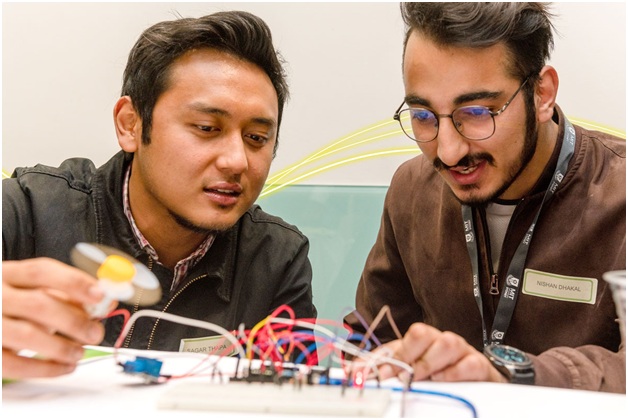
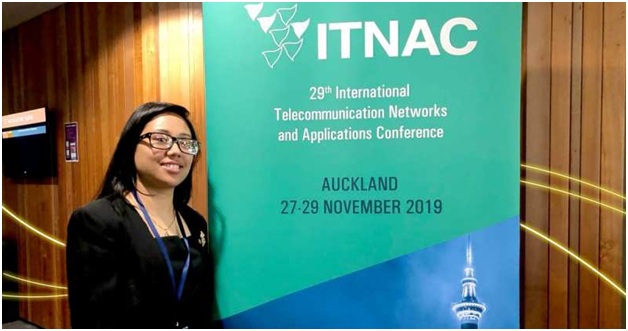
Master of Engineering (Telecommunication) student, Ms Archana Banepali submitted a full research paper on the findings from her Industry Project to the 29th International Telecommunication Networks and Applications Conference (ITNAC). The paper titled “Design and Implementation of Wi-Fi Based Attendance System Using Raspberry Pi’’ has been accepted for publication, and additionally, Archana received a travel grant to present her work at the 2019 ITNAC conference in New Zealand, providing Archana with the opportunity to present her work to an international audience.

The Industry Project completed as part of her Master of Engineering course was supervised by Dr Rajan Kadel in coordination with Dr Deepani B. Guruge and Sharly J. Halder. In an interview about the project, Archana gave credit to the MIT project supervisors and other academics that supported her in this journey.

Archana said she used to be meek and shy and that this opportunity and the support she received from MIT has transformed her confidence. MIT congratulates Archana on this exceptional achievement and looks forward to the publication of the final paper in 2020.

Reaffirming the Quality of MITs Engineering Degrees

Telecommunications and networking are two of the fastest growing professions today. Telecommunications networks result from cohesion of several technologies into integrated, all-purpose network architectures such as the fourth generation (4G) and the emerging fifth generation (5G) networks.

Deloitte Access Economics’ report on ‘Australia’s Digital Pulse’ in 2017 predicts that based on current Australia’s workforce growth data on information and communications technology (ICT), there will be average growth of 2% per annum over the next five years within the ICT sector. The report also identifies the ability to create opportunities in optimizing the effectiveness of 5G mobile technology deployment as a channel for Australia to reap the full benefits from the digital revolution and era.

Melbourne Institute of Technology (MIT) is one of the few private higher education institutions in Australia that offers undergraduate and postgraduate degrees in Telecommunications Engineering.

Melbourne Institute of Technology (MIT)’s Bachelor of Engineering Technology and Master of IT courses are unique as they focus on supporting and leveraging on these technologies. They are offered with integrated industry experience as mandatory, enabling students to gain valuable experience and future job opportunities.

MIT is proud to announce it has received full accreditation for a period of seven years by Australia’s Tertiary Education Quality and Standards Agency (TEQSA). This is in addition to full accreditation from Engineers Australia (EA) for these Engineering courses. These are outstanding outcomes for MIT, (currently) the only Australian private higher education institution having received the maximum period of re-accreditation by TEQSA and EA for its Engineering courses and reconfirms the caliber of MITs Engineering courses.

Design a site like this with WordPress.com
Get started