Soft Skills Will Make All the Difference

Soft skills will make all the difference to you. Human-centric capabilities such as problem-solving, critical thinking and communication will be the things that set you apart from others.  

According to recent findings reported in The Foundation for Young Australians’ (FYA) New Work Order report series there are four things identified by young people as holding them back from a transition into a great career: [fya.org.au]

  1. Not enough work experience.
  2. Lack of appropriate education.
  3. Lack of career management skills.
  4. Not enough jobs.

It’s no wonder that many young people are concerned about their future. McKinsey & Company predict that 25 per cent of today’s jobs will disappear as a result of automation and artificial intelligence. A more positive prediction comes from the US think tank Institute for the Future, who believes that 85 per cent of jobs in 2030 have yet to be invented.

Here are 4 ways MIT ensures students are ready for the jobs of the future.

Work-related skills

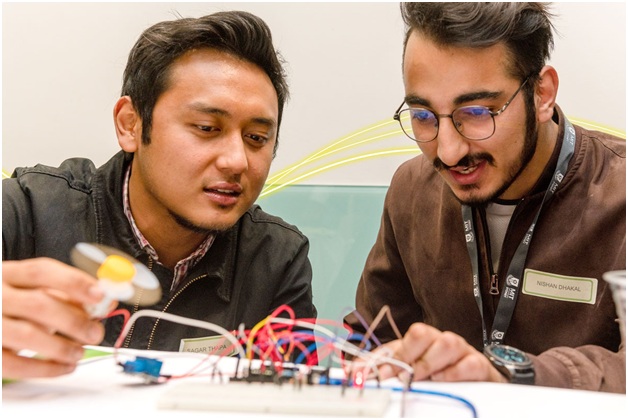
At MIT, all our degree courses are steeped in practical work. Students gain a great understanding of how to apply their theoretical learning in the real-world. And what is more, all MIT degree courses require student participation in a real industry-connected project.

The industry-connected project, known as a Capstone Project, provides students with the experience of working with a real company. As a result of this experience, students develop the soft skills they’ll use in the workplace such as teamwork, collaboration and presentations.

It’s the soft skills or human-centric capabilities, such as problem-solving, critical thinking, innovation, teamwork, collaboration and communication that will set you apart in competition for a great career. 

Technical skills

Technology is reshaping the way we work. New innovations in robotics, artificial intelligence and internet of things technologies are creating entirely new jobs and careers.

MIT degree courses in IT networking and Telecoms Engineering provide students with the technical skills to open doors.  Everyone is focused on keeping up to date with the latest in technology and business ideas – including AI, robotics, algorithms, digital marketing, blockchain, cloud technology, 5G and more.  Read More

MIT Engineering Student receives ITNAC Grant for Industry Project

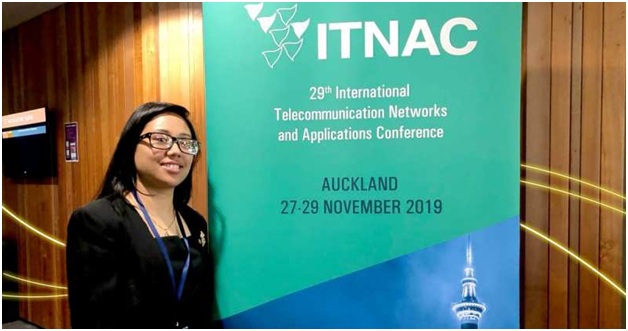
Master of Engineering (Telecommunication) student, Ms Archana Banepali submitted a full research paper on the findings from her Industry Project to the 29th International Telecommunication Networks and Applications Conference (ITNAC). The paper titled “Design and Implementation of Wi-Fi Based Attendance System Using Raspberry Pi’’ has been accepted for publication, and additionally, Archana received a travel grant to present her work at the 2019 ITNAC conference in New Zealand, providing Archana with the opportunity to present her work to an international audience.

The Industry Project completed as part of her Master of Engineering course was supervised by Dr Rajan Kadel in coordination with Dr Deepani B. Guruge and Sharly J. Halder. In an interview about the project, Archana gave credit to the MIT project supervisors and other academics that supported her in this journey.

Archana said she used to be meek and shy and that this opportunity and the support she received from MIT has transformed her confidence. MIT congratulates Archana on this exceptional achievement and looks forward to the publication of the final paper in 2020.

Reaffirming the Quality of MITs Engineering Degrees

Telecommunications and networking are two of the fastest growing professions today. Telecommunications networks result from cohesion of several technologies into integrated, all-purpose network architectures such as the fourth generation (4G) and the emerging fifth generation (5G) networks.

Deloitte Access Economics’ report on ‘Australia’s Digital Pulse’ in 2017 predicts that based on current Australia’s workforce growth data on information and communications technology (ICT), there will be average growth of 2% per annum over the next five years within the ICT sector. The report also identifies the ability to create opportunities in optimizing the effectiveness of 5G mobile technology deployment as a channel for Australia to reap the full benefits from the digital revolution and era.

Melbourne Institute of Technology (MIT) is one of the few private higher education institutions in Australia that offers undergraduate and postgraduate degrees in Telecommunications Engineering.

Melbourne Institute of Technology (MIT)’s Bachelor of Engineering Technology and Master of IT courses are unique as they focus on supporting and leveraging on these technologies. They are offered with integrated industry experience as mandatory, enabling students to gain valuable experience and future job opportunities.

MIT is proud to announce it has received full accreditation for a period of seven years by Australia’s Tertiary Education Quality and Standards Agency (TEQSA). This is in addition to full accreditation from Engineers Australia (EA) for these Engineering courses. These are outstanding outcomes for MIT, (currently) the only Australian private higher education institution having received the maximum period of re-accreditation by TEQSA and EA for its Engineering courses and reconfirms the caliber of MITs Engineering courses.

Design a site like this with WordPress.com
Get started